
- Home
- /
- News Updates
- /
- Mediation More Enduring Than...
Mediation More Enduring Than Judicial Decision: Justice Narasimha On Supreme Court's 'Samadhan Samaroh' Program Test Hocalwire
Anushka Singh
20 Aug 2026 1:30 PM IST
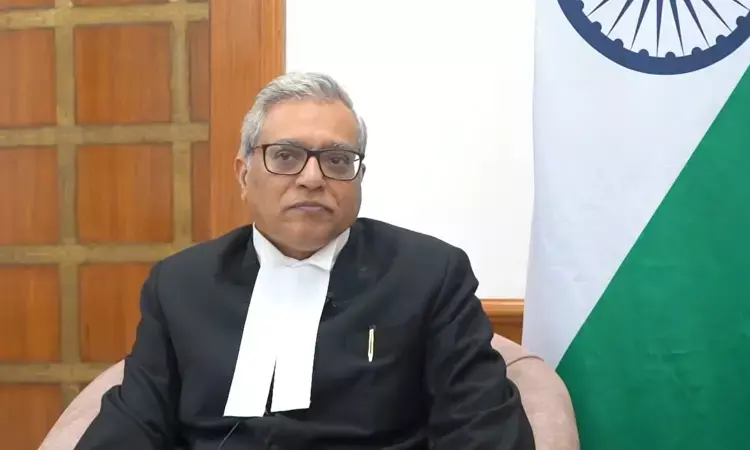
In an interview to Akashvani's News On AIR, Justice Narasimha explained the rationale behind the initiative. He identified two distinct concerns. “The main problem is about the large pendency of cases,” he said, adding that the second issue was “the method by which disputes can be resolved easily comfortably without too much of a technical procedure.” Samadhan Samaroh seeks to...
This is a premium content
Available exclusively to
Our subscribers
Subscribe Premium 
INR 1099+GST
Your support helps us to bring you more content at
an affordable subscription scheme !!!
All payment options available
In an interview to Akashvani's News On AIR, Justice Narasimha explained the rationale behind the initiative. He identified two distinct concerns. “The main problem is about the large pendency of cases,” he said, adding that the second issue was “the method by which disputes can be resolved easily comfortably without too much of a technical procedure.” Samadhan Samaroh seeks to address both, he added.In an interview to Akashvani's News On AIR, Justice Narasimha explained the rationale behind the initiative. He identified two distinct concerns. “The main problem is about the large pendency of cases,” he said, adding that the second issue was “the method by which disputes can be resolved easily comfortably without too much of a technical procedure.” Samadhan Samaroh seeks to address both, he added.In an interview to Akashvani's News On AIR, Justice Narasimha explained the rationale behind the initiative. He identified two distinct concerns. “The main problem is about the large pendency of cases,” he said, adding that the second issue was “the method by which disputes can be resolved easily comfortably without too much of a technical procedure.” Samadhan Samaroh seeks to address both, he added.In an interview to Akashvani's News On AIR, Justice Narasimha explained the rationale behind the initiative. He identified two distinct concerns. “The main problem is about the large pendency of cases,” he said, adding that the second issue was “the method by which disputes can be resolved easily comfortably without too much of a technical procedure.” Samadhan Samaroh seeks to address both, he added.In an interview to Akashvani's News On AIR, Justice Narasimha explained the rationale behind the initiative. He identified two distinct concerns. “The main problem is about the large pendency of cases,” he said, adding that the second issue was “the method by which disputes can be resolved easily comfortably without too much of a technical procedure.” Samadhan Samaroh seeks to address both, he added.In an interview to Akashvani's News On AIR, Justice Narasimha explained the rationale behind the initiative. He identified two distinct concerns. “The main problem is about the large pendency of cases,” he said, adding that the second issue was “the method by which disputes can be resolved easily comfortably without too much of a technical procedure.” Samadhan Samaroh seeks to address both, he added.In an interview to Akashvani's News On AIR, Justice Narasimha explained the rationale behind the initiative. He identified two distinct concerns. “The main problem is about the large pendency of cases,” he said, adding that the second issue was “the method by which disputes can be resolved easily comfortably without too much of a technical procedure.” Samadhan Samaroh seeks to address both, he added.In an interview to Akashvani's News On AIR, Justice Narasimha explained the rationale behind the initiative. He identified two distinct concerns. “The main problem is about the large pendency of cases,” he said, adding that the second issue was “the method by which disputes can be resolved easily comfortably without too much of a technical procedure.” Samadhan Samaroh seeks to address both, he added.In an interview to Akashvani's News On AIR, Justice Narasimha explained the rationale behind the initiative. He identified two distinct concerns. “The main problem is about the large pendency of cases,” he said, adding that the second issue was “the method by which disputes can be resolved easily comfortably without too much of a technical procedure.” Samadhan Samaroh seeks to address both, he added.In an interview to Akashvani's News On AIR, Justice Narasimha explained the rationale behind the initiative. He identified two distinct concerns. “The main problem is about the large pendency of cases,” he said, adding that the second issue was “the method by which disputes can be resolved easily comfortably without too much of a technical procedure.” Samadhan Samaroh seeks to address both, he added.In an interview to Akashvani's News On AIR, Justice Narasimha explained the rationale behind the initiative. He identified two distinct concerns. “The main problem is about the large pendency of cases,” he said, adding that the second issue was “the method by which disputes can be resolved easily comfortably without too much of a technical procedure.” Samadhan Samaroh seeks to address both, he added.In an interview to Akashvani's News On AIR, Justice Narasimha explained the rationale behind the initiative. He identified two distinct concerns. “The main problem is about the large pendency of cases,” he said, adding that the second issue was “the method by which disputes can be resolved easily comfortably without too much of a technical procedure.” Samadhan Samaroh seeks to address both, he added.In an interview to Akashvani's News On AIR, Justice Narasimha explained the rationale behind the initiative. He identified two distinct concerns. “The main problem is about the large pendency of cases,” he said, adding that the second issue was “the method by which disputes can be resolved easily comfortably without too much of a technical procedure.” Samadhan Samaroh seeks to address both, he added.In an interview to Akashvani's News On AIR, Justice Narasimha explained the rationale behind the initiative. He identified two distinct concerns. “The main problem is about the large pendency of cases,” he said, adding that the second issue was “the method by which disputes can be resolved easily comfortably without too much of a technical procedure.” Samadhan Samaroh seeks to address both, he added.In an interview to Akashvani's News On AIR, Justice Narasimha explained the rationale behind the initiative. He identified two distinct concerns. “The main problem is about the large pendency of cases,” he said, adding that the second issue was “the method by which disputes can be resolved easily comfortably without too much of a technical procedure.” Samadhan Samaroh seeks to address both, he added.In an interview to Akashvani's News On AIR, Justice Narasimha explained the rationale behind the initiative. He identified two distinct concerns. “The main problem is about the large pendency of cases,” he said, adding that the second issue was “the method by which disputes can be resolved easily comfortably without too much of a technical procedure.” Samadhan Samaroh seeks to address both, he added.In an interview to Akashvani's News On AIR, Justice Narasimha explained the rationale behind the initiative. He identified two distinct concerns. “The main problem is about the large pendency of cases,” he said, adding that the second issue was “the method by which disputes can be resolved easily comfortably without too much of a technical procedure.” Samadhan Samaroh seeks to address both, he added.In an interview to Akashvani's News On AIR, Justice Narasimha explained the rationale behind the initiative. He identified two distinct concerns. “The main problem is about the large pendency of cases,” he said, adding that the second issue was “the method by which disputes can be resolved easily comfortably without too much of a technical procedure.” Samadhan Samaroh seeks to address both, he added.In an interview to Akashvani's News On AIR, Justice Narasimha explained the rationale behind the initiative. He identified two distinct concerns. “The main problem is about the large pendency of cases,” he said, adding that the second issue was “the method by which disputes can be resolved easily comfortably without too much of a technical procedure.” Samadhan Samaroh seeks to address both, he added.